An earth observation and explainable machine learning approach for determining the drivers of invasive species — a water hyacinth case study
Abstract
Invasive species management is often constrained by limited resources and complicated by ecological and socio-economic variability across landscapes, leading to inconsistent outcomes. We use water hyacinth (Pontederia crassipes) in South Africa as a case study to demonstrate how combining earth observation (EO) data, species distribution models (SDMs), and explainable artificial intelligence (xAI) can support more spatially explicit and context-sensitive management strategies. Despite decades of control efforts, water hyacinth remains widespread, with its proliferation shaped by ecological and socio-economic contexts in which the weed proliferates. Using SHapley Additive exPlanations (SHAP), we studied the environmental and socio-economic contexts impacting water hyacinth prevalence across multiple spatial scales in South Africa. Consistent patterns emerged with known physiological constraints, such as minimum temperature, while novel spatial trends were revealed—highlighting temperature effects along the coast and the role of vegetation type in inland regions. These insights offer opportunities for targeted fieldwork to investigate emergent non-linear relationships and interaction effects between covariates. The spatially explicit outputs, covering all South African water bodies, provide a low-cost, scalable tool to guide the prioritization of risk, inform monitoring and early detection efforts, and support the selection of locally appropriate management strategies. While focused on water hyacinth, our approach is generalizable to other invasive species, illustrating the value of integrating EO data and xAI to enhance understanding of species-environment dynamics and enable adaptive, data-driven intervention planning.
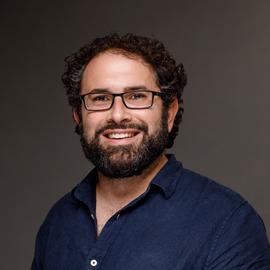
Benjamin Rosman
Lab Director
I am a Professor in the School of Computer Science and Applied Mathematics at the University of the Witwatersrand in Johannesburg. I work in robotics, artificial intelligence, decision theory and machine learning.